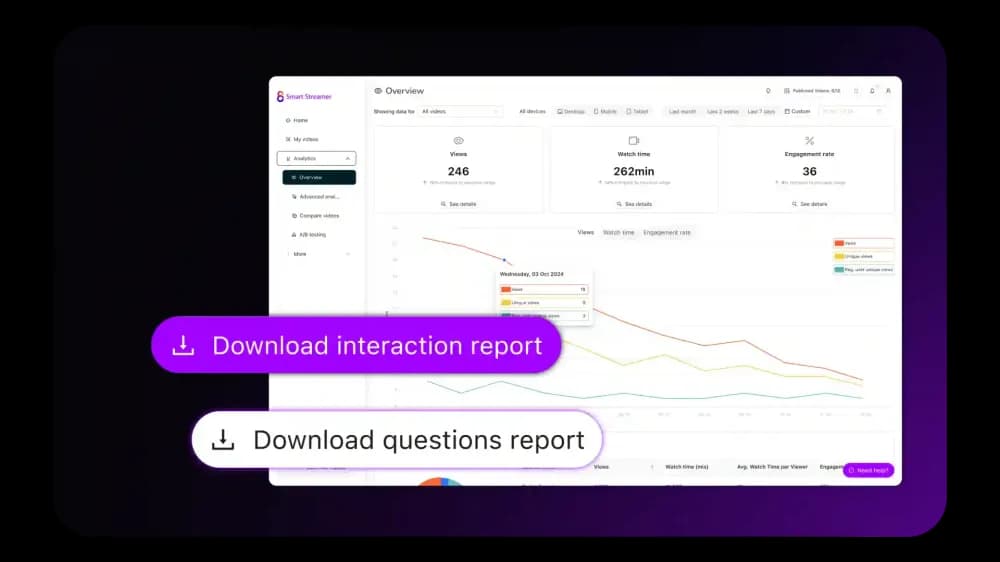
Organisations are investing more in video-based training than ever, but many HR and L&D teams still cannot answer a basic question: is it working? Measuring employee training engagement requires more than tracking who finished a module. This article covers how to use video analytics to measure engagement accurately, diagnose content problems, and connect training data to outcomes that matter to the business.
Why do employee training programmes lack meaningful engagement data?
Most training programmes are built around content delivery rather than measurement. Video is created, distributed through an LMS, and tracked by training completion rate alone. Without video analytics, that single data point tells HR and L&D teams very little about whether the content was understood, relevant, or retained.
The structural problem is that many organisations use video hosting and LMS setups that were not designed to capture employee training data beyond basic playback events. Without visibility into which sections employees skipped, where engagement dropped, or how they performed on knowledge checks, programme decisions are being made on incomplete information.
Video hosting platforms such as Cinema8 include built-in analytics and play an important role in L&D, giving teams the data infrastructure needed to measure employee training engagement with the depth the business truly requires.
The video analytics metrics that measure employee training engagement
Effective employee training video analytics begins with tracking the right signals. The following video engagement metrics give HR and L&D teams a clearer picture of how employees are actually engaging with video-based training content within their LMS:
- Watch depth and skip behaviour: How far into a training module an employee progresses and which sections they skip. Tracked at the individual level, this reveals whether content is holding attention or losing it at specific points.
- Knowledge check and quiz performance: How employees perform on embedded assessments (provided though interactive video hosting platforms for L&D) within the video. This connects viewing behaviour to demonstrated understanding.
- Branching path and decision data: In scenario-based training, branching paths show which decisions employees make. This shows whether employees are engaging thoughtfully with the content or moving through it without consideration.
- Heatmap engagement patterns: Which sections of a training module are rewatched, skipped, or abandoned across the workforce. LMS video analytics at this level identifies where content is resonating and where it is not.
- Repeat viewing behaviour: Whether employees return to specific modules or sections. Repeat viewing of a particular segment can indicate either strong interest or difficulty understanding the content, both of which are valuable signals.
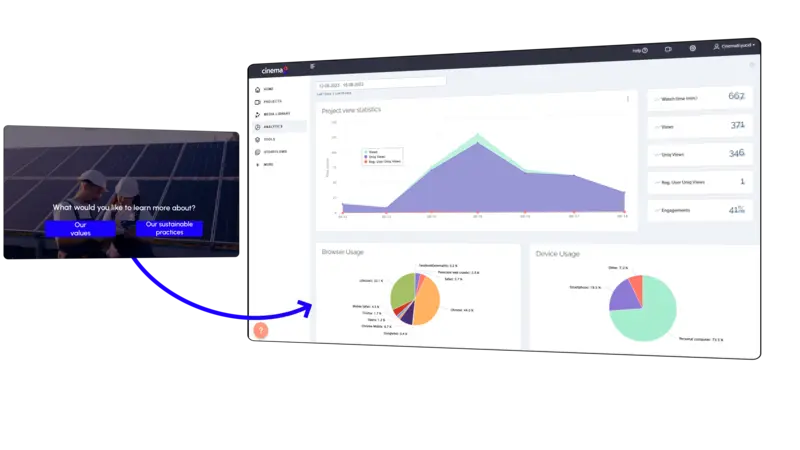
How to measure employee training engagement with video analytics
Measuring training effectiveness requires reading the above metrics together. This is because reading a single metric can be misleading. For example, an employee with high watch depth but poor knowledge check performance may have watched a module without retaining anything meaningful. On the other hand, an employee with moderate watch depth who consistently replays a specific section and scores well on assessments is demonstrating stronger engagement than the watch depth figure alone suggests.
Strong employee training engagement across a module typically include:
- a watch depth consistently above 75% on core content,
- knowledge check scores that reflect the learning objectives,
- deliberate branching decisions that indicate the employee is processing scenarios rather than selecting answers at random,
- and limited skip behaviour on sections that carry key information.
Weak engagement has a different pattern. Indications that the training is not connecting with the employee can include:
- early drop-off or consistent skipping of key sections,
- low or inconsistent quiz scores,
- and branching decisions that follow the path of least resistance rather than reflecting genuine consideration.
Video analytics for training gives L&D teams the ability to identify both patterns at the individual and department levels. When these signals are tracked through a platform that supports viewer-level analytics, such as Cinema8, HR and L&D teams can move from reporting on training completion to genuinely measuring training effectiveness across the workforce.
Using video analytics to diagnose underperforming training content
In addition to being a measurement tool, video analytics for training can be used as a diagnostic tool. When employee training data shows consistent drop-off at the same point across multiple viewers, it's a signal that the content at that point is losing the audience for some reason.
The same logic applies to knowledge check performance. Low interaction rates or consistently poor scores on a specific assessment highlight a gap between what the content delivers and what the assessment expects. Heatmap cold spots and sections that employees skip or abandon without rewatching identify training video engagement metrics that are not landing as intended.
Used diagnostically, this employee training data gives L&D teams a clear brief for content revision. Teams can then isolate the specific sections that are underperforming and address them directly.
Connecting training engagement data to business outcomes
Measuring training effectiveness is most valuable when the data can be presented in terms that HR leadership and the wider business recognise. Engagement metrics alone do not make that case. The connection has to be made explicit.
Onboarding speed is one of the clearest links. When employee training engagement data shows that new starters who complete key modules with high watch depth and strong knowledge check scores reach productivity faster than those who do not, that is a measurable business outcome tied directly to training performance.
Compliance is another. Training completion rate has traditionally been the metric used to satisfy audit and regulatory requirements. Employee training data that goes beyond completion to include assessment scores and verified engagement with specific content gives compliance teams a more defensible record.
Knowledge retention and workforce performance follow the same logic. When training analytics show that employees who engage deeply with a module perform differently on the job, L&D teams have the evidence needed to connect video-based training investment to workforce outcomes.
Measuring employee training engagement with Cinema8
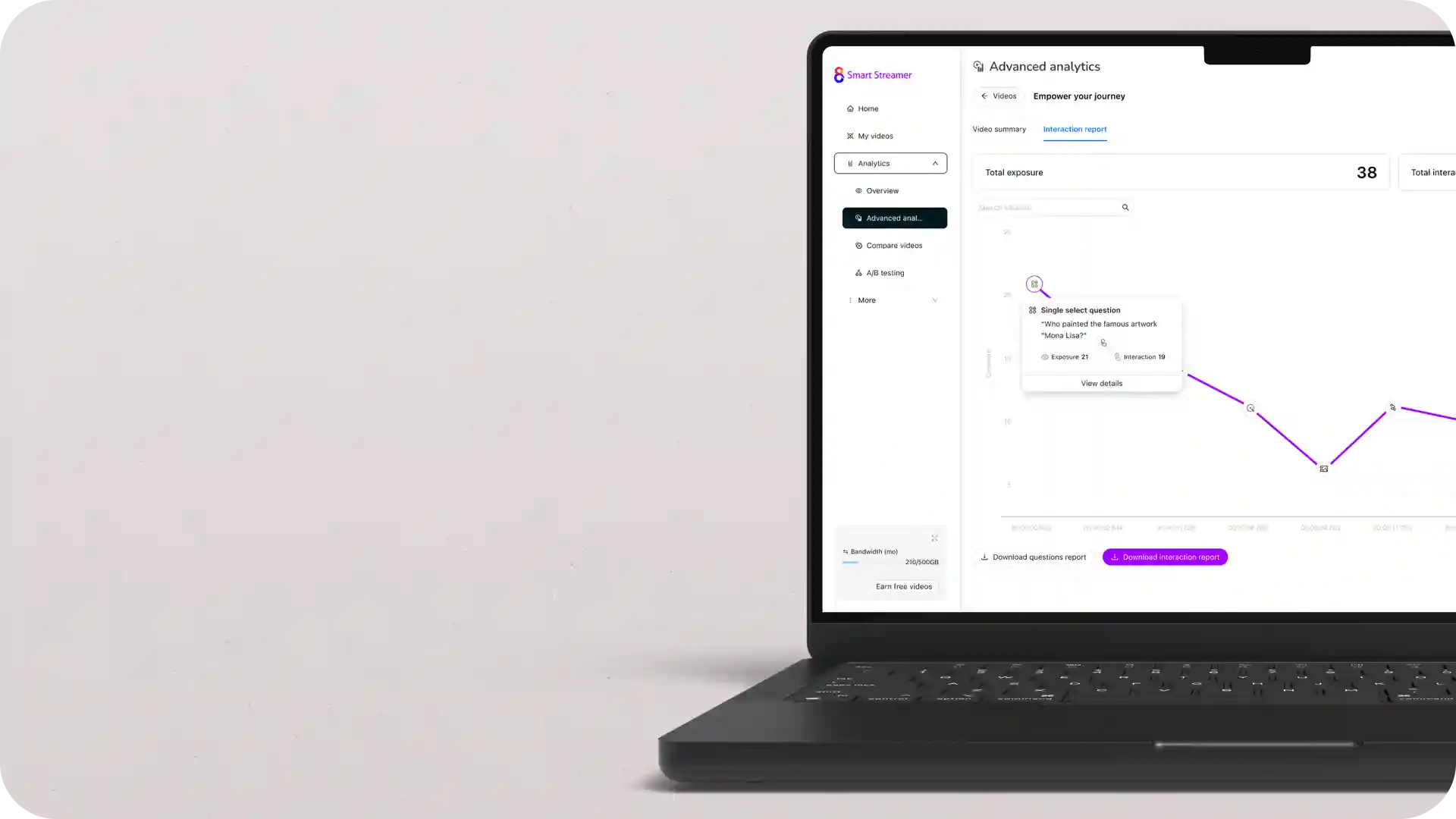
Cinema8's video hosting platform is built for the kind of employee training video analytics that many other video hosting platforms do not provide. Where basic platforms record playback events, Cinema8 captures the viewer-level data that L&D teams need to measure engagement accurately and act on it. It also provides interactive video tools that help increase training retention.
Heatmap tracking shows exactly which sections of a training module employees are rewatching, skipping, or abandoning, at the individual and team level. Knowledge checks and quiz data are captured in context, connecting assessment performance directly to viewing behaviour. For organisations using interactive, scenario-based training, branching path reporting shows which decisions employees made and how their choices varied across the workforce.
LMS-integrated video analytics are supported through native SCORM and LTI integration, meaning Cinema8's video hosting platform works within existing learning infrastructure. Video hosting for training through Cinema8 gives HR and L&D teams a single platform for content delivery, engagement tracking, and the reporting needed to present training performance as a business metric.
Turning employee training analytics into actionable insight
Actionable insight comes from reading the right video engagement signals together. Watch depth, assessment performance, branching decisions, and heatmap behaviour give L&D teams a reliable picture of whether training is working, where content is failing, and how to connect both to outcomes the business recognises.
When those signals are tracked and read as a system, measuring training effectiveness becomes a practical discipline. L&D teams therefore gain the evidence to improve content, accelerate onboarding, strengthen compliance records, and connect training investment to workforce performance.
Cinema8 gives HR and L&D teams the analytics infrastructure to do this at scale, and can be integrated with LMS environments too. If your organisation is ready to start turning employee training analytics into actionable insight, explore Cinema8 today.