Video hosting plays a central role in enterprise L&D programmes by enabling organisations to deliver training content securely, consistently, and at scale across global teams. As learning expands across onboarding, compliance, and continuous development, managing video content becomes more complex, particularly when consistency, access control, and performance tracking are required across different regions and roles. In this blog, we explain how video hosting for L&D at scale.
Why is video hosting important for enterprise L&D?
Video hosting is important for enterprise learning and development because it gives organisations a reliable way to deliver training across teams without losing control over educational video access or consistency. As programmes grow, training content often becomes scattered across tools, making it harder to manage updates and ensure employees are working from the correct material.
A dedicated video hosting platform for enterprise L&D brings that content into one place and allows L&D teams to manage how it is distributed across the organisation. This helps teams to maintain accurate training, control who can view specific content, and understand whether employees are actually completing and engaging with what they are assigned.
What enterprise L&D programmes need from a video hosting platform
Enterprise L&D programmes operate across multiple regions, teams, and training requirements, which makes video harder to manage as content volumes increase. A video hosting platform for enterprise L&D needs to support structured delivery, maintain control over who can access content, and give teams clear visibility into how training is being used and completed.
Secure video access and permission control
Enterprise training often includes internal processes, compliance material, and operational knowledge that should not be widely shared. A video hosting platform needs to give L&D teams control over who can view specific content, whether that is based on role, department, or location.
This ensures that training is only accessible to the right audiences and reduces the risk of content being distributed outside the organisation. It also supports governance requirements, where access to certain materials must be restricted and clearly managed.
Scalable video delivery across global teams
As training programmes expand, video content needs to be delivered reliably to employees working in different regions and environments. A video hosting platform should ensure that videos load properly across devices and network conditions without creating delays that interrupt learning.
This allows organisations to roll out training across teams at the same time, while maintaining a consistent experience for every employee. It becomes particularly important when delivering onboarding or compliance programmes where timing and accuracy are critical.
Integration with LMS and learning ecosystems
Enterprise L&D programmes rely on structured learning environments, so video hosting platforms for L&D need to work within existing learning management systems (LMS). A video hosting platform should allow training content to be embedded directly into learning paths, courses, and internal systems without creating duplication or extra management overhead.
This approach keeps content centralised while ensuring it appears wherever training is delivered. L&D teams can update videos in one place and maintain consistency across the organisation, while employees access training within the systems they already use.
Analytics for training performance and optimisation
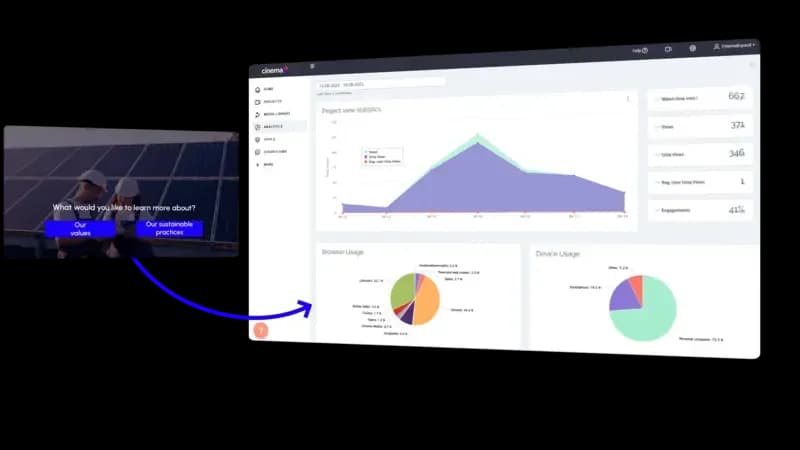
Another part of video hosting's role in enterprise L&D programmes is providing an understanding of how employees engage with training content over time. A video hosting platform should include clear analytics that give you insight into how videos are watched, where viewers stop watching, and whether training is being completed as expected.
This gives L&D teams a clearer picture of how training performs in practice. Teams can then identify which content supports learning and where adjustments are needed, whilst using real engagement data to improve outcomes and keep training aligned with business goals.
How video hosting enables L&D programme scale
Scaling an L&D programme requires maintaining consistency in how training is delivered, ensuring content stays accurate, and retaining visibility into how learning performs as the organisation grows.
The best video hosting platforms for training make this possible by centralising how training content is managed. When a video is updated, that change is reflected wherever the content is used, which helps prevent outdated material from continuing to circulate across teams.
They also allow L&D teams to organise training in a way that reflects how the business operates. Content can be aligned to roles, departments, or learning paths, making it easier for employees to access relevant material without relying on manual distribution.
As programmes expand, this structure reduces the need for workarounds and repeated processes. Teams spend less time managing content across multiple systems and more time improving the quality and effectiveness of training.
Common L&D challenges without a dedicated video hosting platform
Many enterprise teams try to scale L&D programmes using general-purpose tools or internal systems. This approach often creates gaps in how training is delivered, accessed, and measured.
For a start, access can become inconsistent because video files are shared across different platforms, especially for employees working in different locations or on varying devices. Playback issues and download limitations can also interrupt training and reduce completion rates.
Visibility is also often limited without a video hosting platform. L&D teams may not know whether employees have watched a video, where they stopped, or whether the training has been completed at all. Video hosting platforms with analytics provide these insights. Similarly, choosing an interactive video hosting platform for L&D can also provide in-depth data.
Control over content becomes harder to maintain as well. Without clear access permissions, training materials can be shared beyond their intended audience, creating risks for compliance and internal knowledge management.
These challenges make it difficult to scale learning and development programmes in a controlled and measurable way. This is why video hosting for L&D programmes becomes necessary as organisations grow.
Who uses video hosting for L&D programmes
Video hosting for L&D programmes is used by teams responsible for delivering and managing training across large organisations. While responsibilities differ, each group relies on video to ensure training is accessible, consistent, and aligned with business requirements.
- L&D managers use video hosting platforms to structure training programmes and keep content consistent across onboarding, compliance, and role-specific learning. They need to ensure employees are accessing the correct material and that updates are reflected across all training.
- HR leaders rely on video hosting to support employee development and manage mandatory training. This includes onboarding new hires and ensuring compliance programmes are completed with clear visibility into participation.
- Operations and product teams use video to roll out process updates, system changes, and product knowledge. Video hosting for L&D programmes ensures these updates reach the right teams and remain accessible for ongoing reference.
Cinema8: Supporting enterprises with video hosting for L&D
Cinema8 is a video hosting platform designed to support enterprise L&D programmes with secure hosting, detailed analytics, and tools that help teams manage training more effectively as content scales.
It gives L&D teams a central place to manage training content, control who can access each video, and understand how employees engage with learning materials. This makes it easier to maintain consistency across programmes while improving visibility into how training performs in practice.
Teams can embed training videos into LMS platforms and internal systems, ensuring content appears within existing learning environments. Updates can be made in one place and reflected across all training, which helps prevent outdated material from continuing to circulate.
This approach allows organisations to scale training without losing control over content, access, or performance, while keeping learning delivery aligned with how teams already work.
How video hosting platforms enable long-term L&D growth
Video hosting for enterprise L&D programmes provides the structure needed to manage training content as organisations grow. It supports consistent delivery across teams, ensures control over who can access learning materials, and gives L&D leaders visibility into how training performs in practice.
As the demands of training increase, these capabilities become essential for maintaining accuracy, improving completion rates, and aligning learning programmes with business goals. A dedicated video hosting platform allows organisations to scale L&D in a controlled and measurable way, without adding complexity to how content is managed or delivered.
For companies scaling enterprise L&D programmes, explore Cinema8’s plans to see how it supports secure video hosting, structured delivery, and clear visibility into training performance.