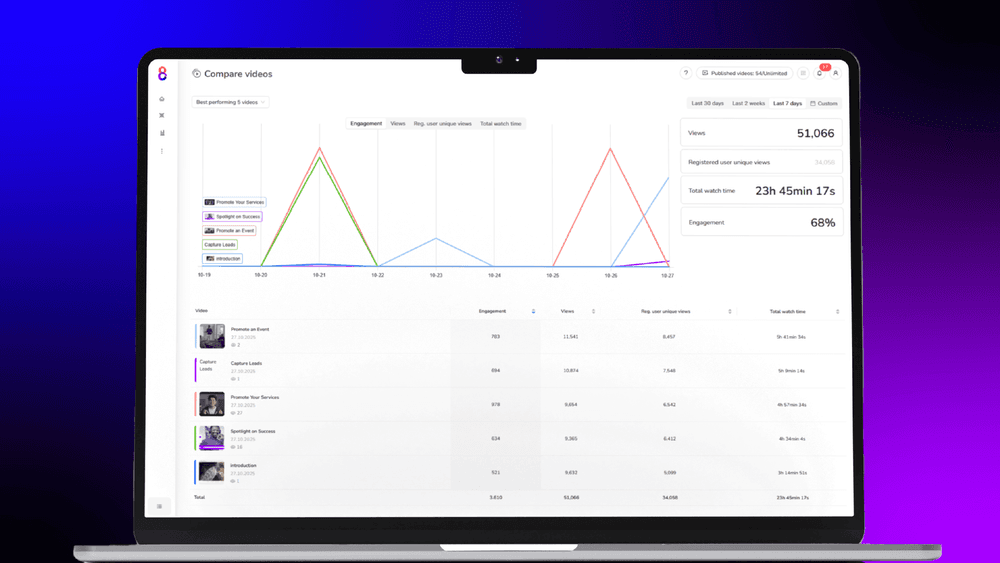
Hosting customer training videos with analytics gives teams direct visibility into how customers progress through onboarding and product education. Many organisations publish training content without clear insight into module completion, repeated friction points, or how engagement connects to activation and retention. This guide outlines how businesses should structure video hosting and analytics so training performance becomes measurable, actionable, and aligned with customer success outcomes.
Why hosting and analytics matter in customer training videos
Customer training influences how quickly new users activate key features and how confidently they adopt the product over time. When videos are hosted without structured video analytics, teams lose visibility into how customers move through modules, where they hesitate, and which topics generate repeated viewing.
Video hosting affects access control, performance reliability, and how content is embedded within learning environments or product interfaces. Customer training analytics, on the other hand, reveal progression patterns, drop-off points, and engagement depth across training content. Together, these two tools help teams determine the effectiveness of training content.
Clear visibility into training behaviour allows customer success and education teams to identify weak modules, improve clarity, and prioritise updates based on evidence. Once video hosting and video analytics are aligned, training becomes measurable and structured, creating the foundation for the practical decisions that follow.
Choose secure and scalable video hosting for customer training
Customer training content often includes detailed workflows, configuration steps, or implementation guidance that should be distributed in a controlled environment. Secure video hosting enables teams to manage access through authentication, domain restrictions, or role-based permissions, ensuring content reaches the intended audience while protecting intellectual property and customer data.
Scalability is equally important. As training libraries expand and customer bases grow, hosting infrastructure should support reliable playback across regions and devices. Global content delivery networks (CDNs) help ensure consistent performance internationally, while SDKs and flexible embedding options allow training videos to be integrated directly into product interfaces or learning environments. Performance consistency during onboarding builds confidence and reduces friction. At the same time, reliable video hosting enhances brand engagement by delivering a professional, uninterrupted customer experience.
Platforms that combine secure hosting, global delivery infrastructure, and integrated analytics simplify how customer training is managed. Solutions such as Cinema8's video hosting platform bring access control, scalable playback, and engagement tracking into a single environment, reducing fragmentation between delivery and measurement. When security, performance, and data collection operate within the same video hosting system, training programmes are easier to scale, monitor, and continuously improve.
Track engagement metrics that measure training effectiveness
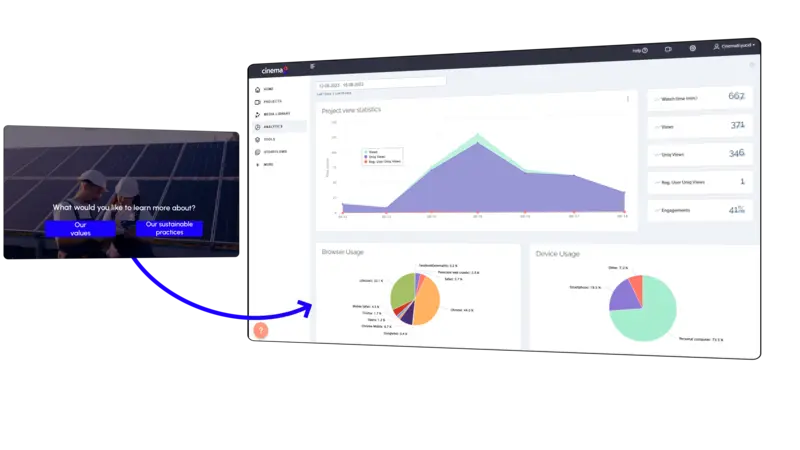
Customer training performance becomes visible through structured engagement data. Metrics should reflect how customers move through interactive product onboarding modules, where they hesitate, and how confidently they apply what they have learned. Tracking the right customer training analytics allows teams to evaluate clarity, progression, and reinforcement across the training experience. The following metrics provide a framework for evaluating how effectively training content supports customer progression.
Completion rates and viewer retention
Completion rates indicate whether customers finish a training module, while viewer retention shows how engagement holds across its duration. Strong retention throughout structured onboarding content suggests that pacing and clarity are aligned with customer needs. Sharp retention drops, on the other hand, often point to unclear explanations, unnecessary complexity, or content that does not match immediate goals. Monitoring these patterns helps teams refine the delivery of ideas or instructions to improve training effectiveness.
Drop-off points in training modules
Drop-off points reveal where customers disengage during a video. Consistent exits at the same timestamp often indicate confusion, overly dense instructions, or missing context. In multi-step customer onboarding flows, early drop-off may signal that foundational information was not fully understood. Analysing these patterns helps teams isolate points of confusion and improve how information is presented within each training segment.
Replays and knowledge reinforcement signals
Replays can indicate that customers are reviewing important steps before applying them. Repeated viewing of setup processes, configuration steps, or feature walkthroughs often reflects careful implementation. However, while occasional replays are expected, concentrated replay activity around specific sections may highlight areas where additional clarification, visual aids, or structured reinforcement is needed to strengthen understanding.
Progression across training modules
Training effectiveness depends on how customers move from one module to the next. Similar to video completion and retention rates, tracking progression across content reveals whether learners follow the intended path or abandon modules midway through. Consistent movement through foundational modules before moving onto advanced content suggests that the structure supports practical learning. Gaps in progression may indicate that certain modules lack relevance or that transitions between topics need clearer context.
Engagement signals within training videos
Certain prompts and knowledge checks provide direct evidence of engagement and comprehension. Participation in embedded questions, confirmations, or feedback prompts signals involvement with key training steps. Low interaction rates may suggest unclear placement or limited relevance to the immediate task. Monitoring these interactions helps teams assess how effectively training reinforces understanding and supports practical application.
Use analytics to improve customer onboarding and retention
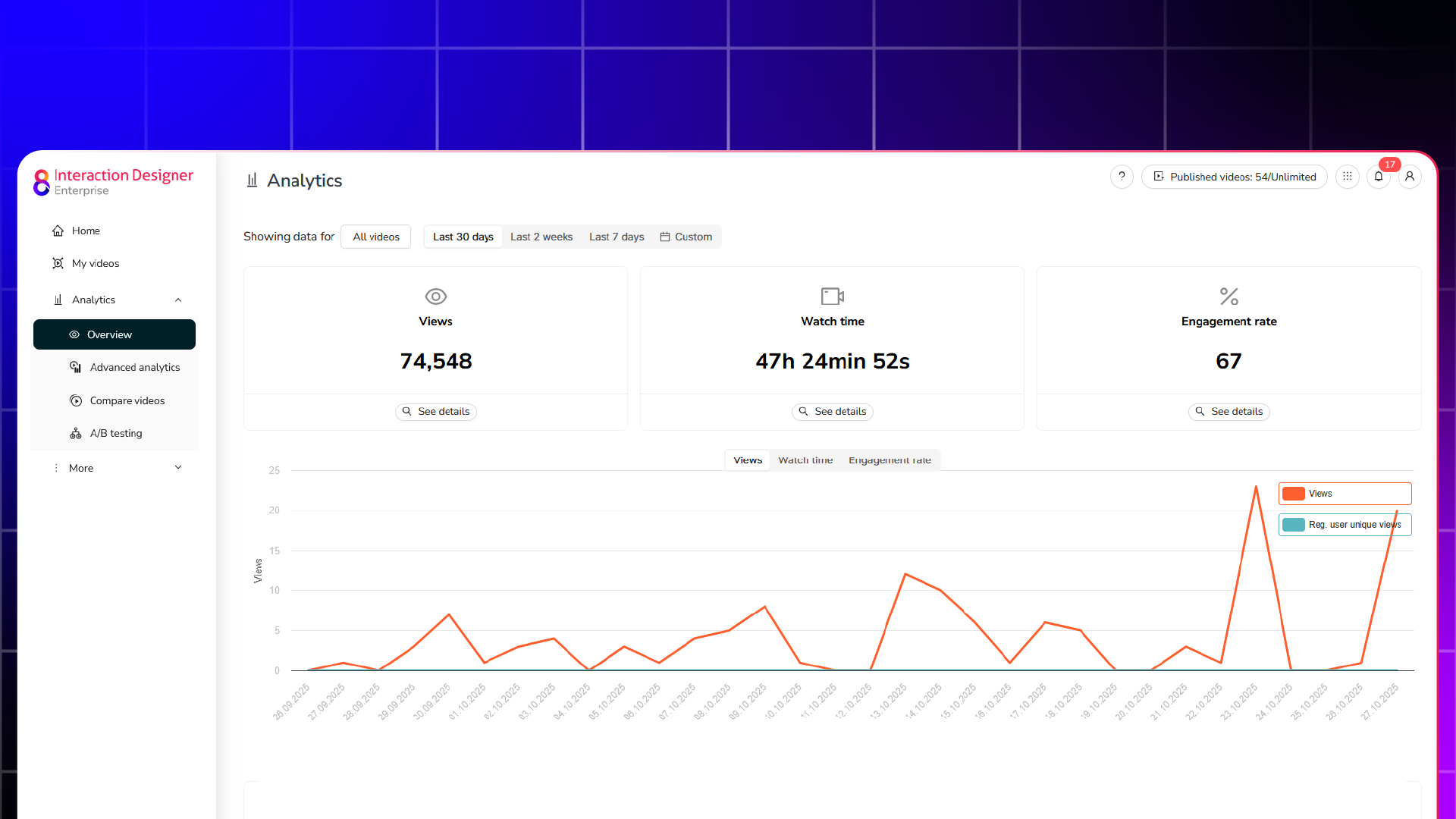
Engagement data should guide how customer onboarding content is structured and refined. If new customers consistently drop off during account setup or first-use tutorials, that content may require clearer step-by-step guidance or better alignment with immediate activation tasks. Identifying friction early helps teams refine self-service video support libraries and reduce onboarding delays and unnecessary support requests.
Over time, video analytics can reveal whether customers return to advanced training modules, revisit feature walkthroughs, or disengage after initial setup. These behavioural patterns not only indicate long-term product confidence, but also contribute to a broader understanding of buyer intent through video engagement data, particularly as customers move beyond initial onboarding and begin deeper product exploration.
Hosting customer training videos with analytics on Cinema8
Hosting customer training videos on a platform that combines secure delivery with integrated video analytics improves the way training performance is managed. Cinema8's video hosting platform provides controlled access options, scalable global delivery, and detailed analytics tracking within a single environment, ensuring that hosting and measurement remain aligned.
With the platform's built-in analytics, teams can monitor viewer retention, progression across modules, and interaction signals without relying on fragmented tools. This unified approach helps teams identify issues, improve clarity, and scale training programmes confidently. By bringing hosting infrastructure and behavioural insight together, Cinema8 supports customer training strategies that are measurable, secure, and designed for long-term adoption.
Turning customer training videos into measurable performance assets
Hosting customer training videos on a dedicated video hosting platform with real-time video interaction analytics gives teams visibility into viewer behaviour, engagement patterns, and onboarding performance. Completion rates, viewer retention, progression across modules, and engagement signals reveal where customers gain confidence and where friction slows activation.
When this data is used to inform content updates and delivery decisions, training becomes part of a structured customer journey that is built for growth. Over time, teams can consistently analyse their videos to strengthen feature adoption, reduce unnecessary support requests, and reinforce product understanding. With secure, scalable video hosting and integrated analytics, customer training evolves into a measurable driver of long-term customer retention.
For businesses looking to host customer training videos with secure delivery and integrated analytics, explore Cinema8’s video hosting platform to track engagement, measure training effectiveness, and continuously improve onboarding performance.