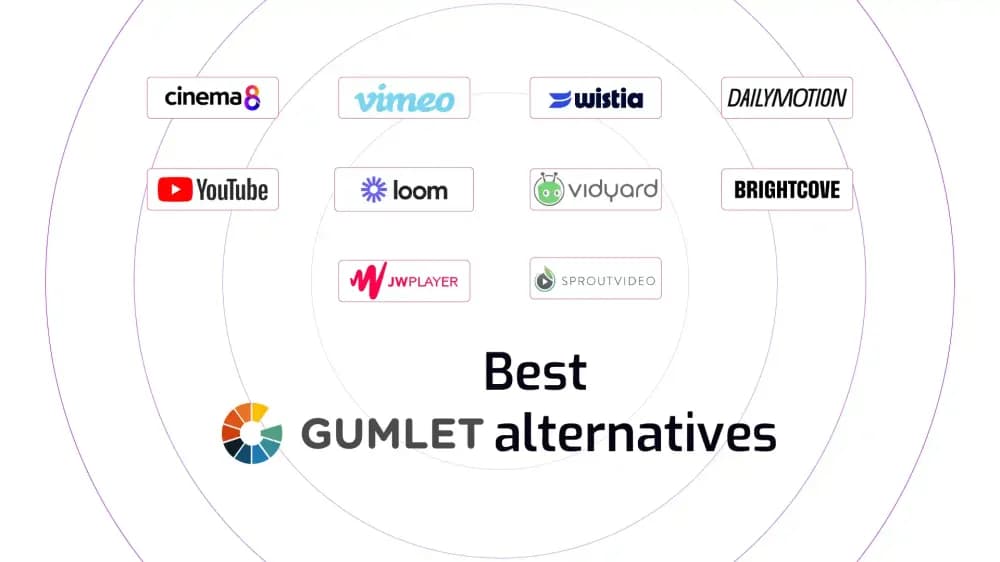
Gumlet is a professional video hosting platform built for reliable playback, secure delivery, branded players, and flexible embedding across websites and applications. As teams use video more widely across marketing, onboarding, training, and customer communication, many start looking for Gumlet alternatives by exploring platforms that offer deeper analytics, more advanced interactivity, and broader workflow support. This guide explores the best Gumlet alternatives for 2026.
What is Gumlet?
Gumlet is a video hosting and delivery platform built around performance optimisation. It focuses on adaptive streaming, compression, and CDN-based delivery to ensure videos load quickly across different devices and bandwidth conditions.
The platform is commonly used by startups, developers, and product teams that prioritise cost-efficient streaming infrastructure and reliable playback. Gumlet also offers APIs and integrations that make it easier to embed video delivery within websites, apps, and documentation platforms.
However, Gumlet is designed primarily as a performance delivery layer rather than a full video workflow platform. Teams that rely on video for marketing campaigns, onboarding, internal training, or customer education often require additional features such as deeper engagement analytics, lead capture tools, and viewer interaction capabilities. This is where many organisations begin exploring Gumlet alternatives.
Why teams look for Gumlet alternatives
Teams often begin comparing Gumlet alternatives when video becomes more deeply embedded in business workflows. While Gumlet provides reliable hosting, secure playback, branded players, analytics, and engagement tools such as forms and CTAs, organisations using video across multiple departments may require additional capabilities as their needs expand.
These requirements can include richer analytics, experimentation tools such as A/B testing, more advanced interactive video features, or deeper integrations with CRM, LMS, and marketing systems. As video libraries grow and teams collaborate across marketing, sales, onboarding, and training initiatives, platforms that support broader operational workflows can become more appealing.
Pricing and scalability can also influence the decision. Gumlet offers flexible plans and enterprise tiers, but organisations planning long-term video strategies often compare platforms based on how well they support analytics, security, interactivity, and cross-department video use over time.
Top 10 alternatives to Gumlet
The table below brings together the platforms most commonly compared with Gumlet, highlighting their starting price, key features, and the teams that typically benefit from each platform.
| Platform | Starting Price | Key Features | Best For | Pros | Cons |
|---|---|---|---|---|---|
| Cinema8 | Free | Secure hosting, interactive elements, advanced analytics | Teams using video across marketing, training, onboarding | Strong analytics, interactive tools, flexible workflows | Some advanced features require onboarding |
| Vimeo | Free | High-quality playback, privacy controls, collaboration | Creative teams and agencies | Clean player design, strong sharing controls | Limited interactivity |
| Wistia | Free | Branded player, lead capture, engagement analytics | Marketing-focused video teams | Strong branding and reporting tools | Pricing increases as libraries grow |
| SproutVideo | $10/month | Secure hosting, access controls, custom players | Private and restricted video hosting | Strong privacy controls, flexible plans | Limited interactive features |
| Vidyard | $59/month for hosting | Video messaging, screen recording, sales analytics | Sales and customer communication | Personalised outreach, CRM-friendly | Full hosting requires higher tiers |
| Loom | Free | Screen recording, quick sharing tools | Internal communication and updates | Fast recording, simple sharing | Limited long-term hosting capabilities |
| Brightcove | Custom pricing | Enterprise hosting, OTT tools, global delivery | Large organisations and broadcasters | Scalable, secure, enterprise-grade | High cost and complexity |
| YouTube | Free | Monetisation, fast CDN delivery | Publishers and media | Good CDN performance, monetisation | Ads, branding limits, limited control |
| Dailymotion | Free | Public video hosting, global distribution, monetisation tools | Publishers and media platforms distributing public video content | Large audience reach, monetisation options | Limited privacy controls, fewer business hosting features |
| JW Player | Custom pricing | Smooth playback, advertisement monetisation | Media platforms and publishers | Strong CDN performance, monetisation | Limited marketing and interactivity |
1. Cinema8
Overview
Cinema8 is a comprehensive video hosting platform designed for organisations using video across marketing, training, onboarding, and customer education. It combines secure video hosting with interactive tools and advanced analytics, allowing teams to measure engagement and guide viewers toward meaningful actions.
Cinema8 vs Gumlet: Feature and pricing comparison
- Features: Both Cinema8 and Gumlet provide professional video hosting, secure playback, branded players, analytics, and engagement features such as forms and CTAs. Cinema8 extends these capabilities with quizzes, branching paths, shoppable video elements, A/B testing, and detailed viewer analytics including heatmaps.
- Pricing: Cinema8 offers a free tier and scalable plans for growing teams that require advanced analytics, more users, and integration capabilities. Gumlet also provides tiered pricing from free to enterprise levels depending on hosting requirements.
Pros, cons, and use cases
- Pros: Advanced interactivity, detailed analytics, A/B testing, secure hosting, CRM and LMS integrations.
- Cons: Teams using more advanced features may need a short onboarding to take full advantage of the platform.
- Use cases: Ideal for organisations using video across marketing campaigns, onboarding programmes, product education, and training environments where engagement and measurable outcomes are important.
Get a deeper comparison of Gumlet and Cinema8 in this blog: Cinema8 vs Gumlet: Which is best for video hosting?
2. Vimeo
Overview
Vimeo is widely known for high-quality playback, clean player design, and strong privacy controls. It is frequently used by creative professionals, agencies, and organisations that prioritise polished presentation and controlled sharing.
Vimeo vs Gumlet: Feature and pricing comparison
- Features: Vimeo focuses on presentation quality, collaboration tools, and sharing controls. Gumlet emphasises flexible hosting and engagement features within websites and digital products.
- Pricing: Vimeo offers a free Basic plan with paid tiers that expand storage and team collaboration features.
Pros, cons, and use cases
- Pros: High-quality playback, professional presentation, strong privacy options.
- Cons: Limited advanced interactive capabilities.
- Use cases: Suitable for portfolios, client presentations, and brand-focused video distribution.
3. Wistia
Overview
When comparing Wistia to other video hosting platforms, you'll discover that it is designed primarily for marketing teams. It provides branded video players, engagement analytics, and lead capture tools that help organisations track video performance across campaigns.
Wistia vs Gumlet: Feature and pricing comparison
- Features: Wistia includes branded video players, engagement heatmaps, viewer analytics, and built-in lead capture forms. These tools help marketing teams understand viewer behaviour and measure how video content contributes to campaigns.
- Pricing: Wistia offers a free plan with limited hosting. Paid plans start at $19 per month, with pricing increasing as video libraries grow.
Pros, cons, and use cases
- Pros: Marketing analytics, branded video players, built-in lead capture tools.
- Cons: Pricing increases as video libraries expand and hosting usage grows.
- Use cases: Best suited to marketing teams embedding videos on landing pages, websites, and campaign pages where branding, viewer analytics, and lead capture support marketing performance tracking.
4. SproutVideo
Overview
SproutVideo is a secure video hosting platform designed for organisations that prioritise privacy and controlled video distribution. It provides branded video players, analytics, and strong access controls, making it popular with teams managing private video libraries or restricted content.
SproutVideo vs Gumlet: Feature and pricing comparison
- Features: SproutVideo focuses on secure video hosting with tools such as password protection, domain restrictions, customisable players, and viewer analytics. These features help organisations manage who can access videos and monitor viewing behaviour.
- Pricing: SproutVideo’s plans start at $10 per month, with higher tiers unlocking advanced analytics, additional storage, and stronger security controls.
Pros, cons, and use cases
- Pros: Strong security controls, branded players, reliable analytics, flexible privacy settings.
- Cons: Limited interactive features and fewer marketing-focused video tools.
- Use cases: Best for organisations hosting private training libraries, internal communications, or client-restricted content.
5. Vidyard
Overview
Vidyard is a video platform designed primarily for sales communication and personalised outreach. It combines screen recording, video messaging, and viewer analytics, helping revenue teams share demos, follow-ups, and personalised video messages with prospects and customers.
Vidyard vs Gumlet: Feature and pricing comparison
Features: Vidyard includes screen recording, webcam video messaging, viewer analytics, and CRM integrations to help sales teams understand when prospects watch videos and how they interact with personalised messages.
Pricing: Vidyard offers free tools for video messaging and recording. Full video hosting capabilities require paid plans, with hosting and advanced analytics typically starting around $59 per month.
Pros, cons, and use cases
- Pros: Strong sales integrations, personalised video messaging, useful viewer engagement insights.
- Cons: Hosting features require higher-tier plans and pricing increases quickly.
- Use cases: Ideal for sales and customer success teams sending personalised demos, product walkthroughs, and follow-up videos where tracking viewer engagement helps guide conversations and improve outreach effectiveness.
6. Loom
Overview
Loom is a video hosting and screen-recording platform designed for fast internal communication. Teams use it to record, host, and share videos such as walkthroughs, updates, and explanations without needing a more complex video production or hosting workflow.
Loom vs Gumlet: Feature and pricing comparison
- Features: Loom provides screen recording, webcam capture, built-in hosting, quick sharing links, commenting, and basic analytics. Videos are automatically hosted in a central workspace where teams can organise recordings and share them internally.
- Pricing: Loom offers a free plan for basic recording and hosting. Paid plans start at around $15 per month, unlocking longer recordings, advanced team workspaces, and additional collaboration features.
Pros, cons, and use cases
- Pros: Fast recording, built-in hosting, simple sharing, useful for team communication.
- Cons: Limited analytics depth and fewer controls for large video libraries.
- Use cases: Best for internal updates, product walkthroughs, onboarding explanations, and support videos where teams need quick recording and hosting rather than large marketing libraries or complex video workflows.
7. Brightcove
Overview
Brightcove offers enterprise video hosting for large-scale video delivery. It supports organisations managing extensive video libraries, global streaming, and live events, making it widely used by broadcasters, media companies, and large enterprises.
Brightcove vs Gumlet: Feature and pricing comparison
- Features: Brightcove provides enterprise video hosting, global CDN delivery, live streaming, OTT distribution, advanced analytics, and extensive integrations. These tools help organisations manage large video libraries and deliver content reliably across multiple regions and devices.
- Pricing: Brightcove uses custom enterprise pricing based on storage, streaming volume, and feature requirements. Plans typically involve a sales process.
Pros, cons, and use cases
- Pros: Enterprise-grade hosting, global delivery, advanced security, scalable streaming infrastructure.
- Cons: High cost and complexity for smaller teams.
- Use cases: Best suited to broadcasters, media companies, and enterprises delivering large video libraries, live events, or OTT services where global scale, reliability, and advanced infrastructure are essential.
For a comprehensive assesment of Brightcove alternatives, read this blog: 10 best Brightcove alternatives for video hosting in 2026
8. YouTube
Overview
YouTube is the world’s largest public video hosting platform, offering free hosting and global reach. It is widely used by businesses, creators, and educators distributing public video content to large audiences through search and recommendations.
YouTube vs Gumlet: Feature and pricing comparison
- Features: YouTube provides public video hosting, built-in discovery through search, audience analytics, and monetisation options. Videos are distributed through the platform’s recommendation system.
- Pricing: YouTube is free to use for hosting and distributing videos. Revenue can be generated through advertising and monetisation programmes available to eligible creators and publishers.
Pros, cons, and use cases
- Pros: Free hosting, large audience reach, strong discovery through search.
- Cons: Ads, limited branding control, restricted privacy options.
- Use cases: Best for awareness campaigns, educational content, and public-facing videos where audience reach and discoverability are more important than branding control or private hosting environments.
9. Dailymotion
Overview
Dailymotion is a global video hosting and sharing platform used by publishers, media companies, and creators distributing public video content. It supports large-scale video delivery, audience discovery, and monetisation through advertising across its platform.
Dailymotion vs Gumlet: Feature and pricing comparison
- Features: Dailymotion provides public video hosting, branded channels, analytics dashboards, and advertising-based monetisation tools. The platform focuses on content distribution and audience reach rather than private hosting or business-focused video workflows.
- Pricing: Dailymotion offers free public hosting supported by advertising. Professional and enterprise options are available for publishers needing branded distribution environments, advanced analytics, or monetisation tools.
Pros, cons, and use cases
- Pros: Large global audience, free hosting, monetisation tools for publishers.
- Cons: Limited privacy controls and fewer business video hosting features.
- Use cases: Best suited to publishers, media organisations, and creators distributing public video content where audience reach and monetisation are more important than private hosting or business video workflows.
10. JW Player
Overview
JW Player is a video hosting and streaming platform widely used by publishers and media companies delivering large volumes of online video. It focuses on fast playback, advertising monetisation, and scalable video delivery across websites and applications.
JW Player vs Gumlet: Feature and pricing comparison
- Features: JW Player provides adaptive streaming, fast playback through global CDN delivery, customisable video players, advertising monetisation, and analytics tools designed for high-volume video distribution.
- Pricing: JW Player uses custom pricing based on traffic, streaming volume, and monetisation needs. Plans typically require a sales process and are aimed at publishers and media organisations.
Pros, cons, and use cases
- Pros: Strong playback performance, advertising monetisation, reliable CDN streaming.
- Cons: Limited marketing tools and fewer interactive video capabilities.
- Use cases: Best suited to publishers, broadcasters, and media platforms delivering large video libraries or ad-supported video content where performance and monetisation are priorities.
Which is the best Gumlet alternative?
Selecting the right Gumlet alternative depends on how your organisation plans to use video. Gumlet provides reliable hosting, branded players, analytics, and engagement tools, but some teams require platforms with stronger marketing workflows, deeper analytics, or more advanced interactive capabilities. The best option will depend on how you use video across your organisation.
- Best overall Gumlet alternative for growing teams: Cinema8 supports organisations using video across marketing, onboarding, training, and customer education. It combines secure video hosting, interactive tools, advanced analytics, and CRM integrations within one platform.
- Best for marketing-focused video: Wistia suits teams running campaigns where branded players, engagement heatmaps, and lead capture tools help measure marketing performance.
- Best for presentation and creative sharing: Vimeo remains popular with agencies and creative teams that prioritise polished playback, clean player design, and controlled sharing.
- Best for secure and restricted hosting: SproutVideo works well for organisations managing private video libraries with password protection, domain restrictions, and strong access controls.
- Best for sales communication: Vidyard supports personalised outreach and product demos with viewer tracking and CRM integrations designed for revenue teams.
- Best for internal communication: Loom helps distributed teams record, host, and share quick walkthroughs, updates, and explanations without complex video production workflows.
- Best for enterprise-scale streaming: Brightcove is designed for organisations requiring global delivery infrastructure, large video libraries, and enterprise-level security.
- Best for public reach and discovery: YouTube provides free hosting and global discoverability through search and recommendations.
- Best for publishers and monetisation: JW Player suits media companies delivering high-volume video with advertising and monetisation tools.
- Best for additional public distribution: Dailymotion offers public video hosting and monetisation options for publishers and creators reaching audiences beyond their own websites.
Final thoughts about choosing a Gumlet alternative
Gumlet provides reliable video hosting with branded players, analytics, and engagement tools that allow organisations to embed and manage video across websites and applications. However, as video becomes more embedded in marketing campaigns, onboarding journeys, training platforms, and customer communication, many teams begin comparing platforms that offer broader workflows, deeper analytics, or stronger engagement features. Cinema8 supports this wider operational use of video with secure hosting, interactive tools, and detailed analytics in one environment. Wistia centres on marketing performance, Vimeo on presentation and creative sharing, SproutVideo on secure access control, Vidyard and Loom on communication workflows, Brightcove on enterprise-scale streaming, and YouTube, Dailymotion, and JW Player on public distribution and audience reach. The right platform ultimately depends on how strategically video is used within your organisation.