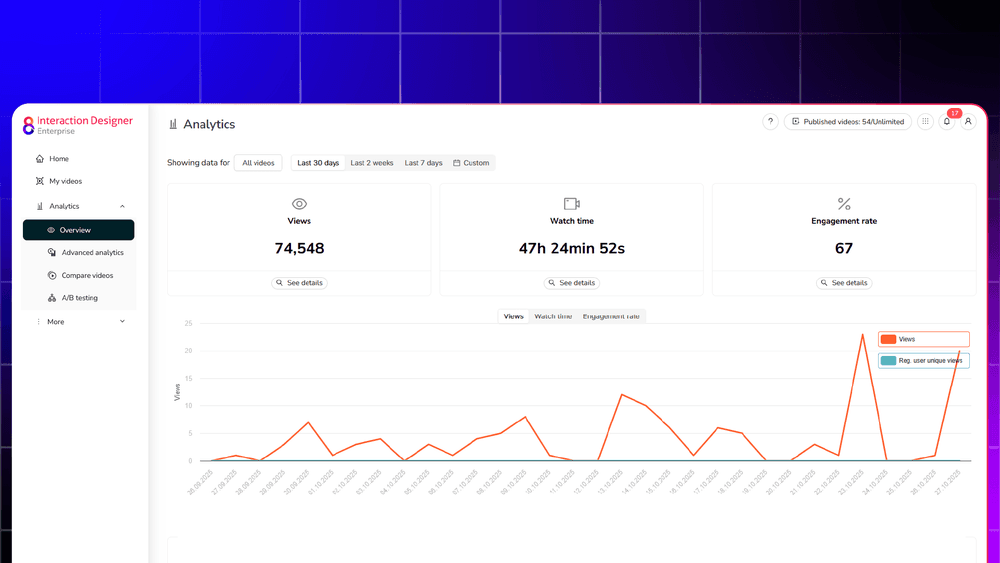
Video analytics improves lead scoring by measuring how prospects engage with decision-stage content and translating that behaviour into lead qualification signals. When used within a video hosting platform, this data becomes trackable at viewer level, helping marketing and RevOps teams prioritise leads based on how they consume content. This guide explains how to structure video analytics into a scoring framework that integrates with CRM workflows and supports more accurate sales follow-up.
What effective lead scoring should achieve in your funnel
Lead scoring should identify which prospects are progressing toward a buying decision and trigger the appropriate response inside your funnel.
The score must differentiate between light video engagement and real evaluation. A lead who views a single awareness video signals interest. A lead who watches most of a product demo, revisits pricing content, and returns within a short period signals strong buyer intent. These behaviours should not carry the same weight.
A scoring model also needs operational impact. Thresholds should trigger routing, notifications, or workflow changes inside your CRM. If a score does not change follow-up timing or ownership, it is not influencing revenue outcomes.
How video analytics strengthens behavioural lead scoring
By using video analytics for lead scoring, you introduce continuous behavioural input into the scoring model. This allows teams to assess how prospects engage with product-led content over time and across multiple sessions and decision stages.
The following behavioural patterns typically indicate stronger evaluation intent to help teams predict conversion potential:
- Sustained watch time on demos, implementation walkthroughs, or pricing breakdowns suggests focused review of decision-stage information.
- Repeated viewing of specific sections often signals comparison, clarification, or internal discussion.
- Multiple decision-stage videos consumed within a short timeframe indicates concentrated research activity.
When this data is tied to identifiable leads, it can feed directly into scoring logic inside your CRM. These viewing patterns become measurable qualification signals that support more accurate lead prioritisation.
Choose which video behaviours should carry scoring weight
Before you start scoring any leads, define which viewing behaviours your business considers meaningful evaluation. This decision should reflect how your sales team qualifies opportunities and what typically happens in the period leading up to a sales conversation. It should also help your team avoid common video analytics mistakes that cost conversions.
Start by linking key buying questions to specific content. If your video analytics show that prospects reviewed pricing, integrations, or onboarding details before speaking to sales, engagement with those assets should form the basis of your scoring criteria.
Next, agree internally on what qualifies as a significant scoring event. Does a demo need to be watched past a defined threshold (such as 75%) before it contributes to a score? Should repeat views increase weighting? Should returning to pricing within 48 hours increase scoring weight?
Clear definitions at this stage prevent inconsistent scoring and ensure the model reflects genuine lead progression.
Build a lead scoring framework: weights, tiers, and decay
Once high-value viewing behaviours have been defined, the next step is structuring them into a scoring model that your CRM can act on. A practical framework assigns numerical weight to behavioural events, groups leads into qualification tiers, and adjusts scores over time to reflect recency. Each component plays a distinct role in ensuring that video interaction data translates into measurable progression rather than inflated activity scores.
Assign scoring weights based on behavioural strength
Scoring weights should reflect the relative importance of each behavioural event in your buying process. Engagement with decision-stage content typically carries more weight than awareness activity, but intensity and recency must also influence scoring.
For example, you might assign:
- +10 for viewing 50% of a product demo
- +25 for watching 80% or more
- +30 for reviewing pricing content
- +15 for returning to the same decision-stage asset within 48 hours
The goal is to focus on the signals that show forward movement through your funnel. Your scoring weights should match the behaviours that consistently lead to qualified opportunities.
Define lead qualification tiers
Once weights are assigned to behaviour signals, group leads into clear qualification tiers based on the total score. Defining lead qualification tiers gives structure to your model and determines how leads are handled inside your CRM.
For example, you might define leads as:
- Engaged: Early behavioural signals but limited decision-stage activity.
- Evaluating: Consistent interaction with product or pricing content.
- Sales-ready: High-intent behaviour across multiple decision-stage assets.
Each tier should correspond to a defined action. An engaged lead may remain in the nurture stage, an evaluating lead may trigger targeted content, and a sales-ready lead should prompt direct follow-up.
The purpose of tiers is clarity. They translate raw lead behavioural data into operational stages that marketing and sales can act on consistently to improve the customer journey.
Apply time-based score decay
Without score decay, historical video engagement can inflate a lead’s priority long after evaluation has slowed down. A good approach is to introduce time-based adjustments to keep scores aligned with current activity. For example:
- Reduce scores after 30 days of inactivity
- Lower weighting for older viewing events
- Reset tiers if no decision-stage content has been consumed within a defined period
Lead score decay ensures that scoring reflects recent progression. It prevents leads from remaining artificially “hot” and helps sales focus on prospects who are currently evaluating your solution.
Map video analytics to CRM fields and automation workflows
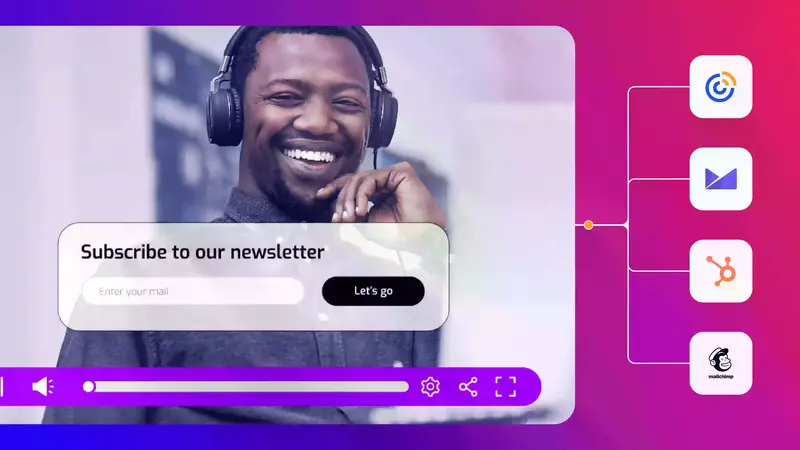
Once your scoring framework is defined, video analytics should be connected directly to your CRM. When using video analytics for lead scoring, behavioural data only becomes operational when it can influence routing, prioritisation, and automation.
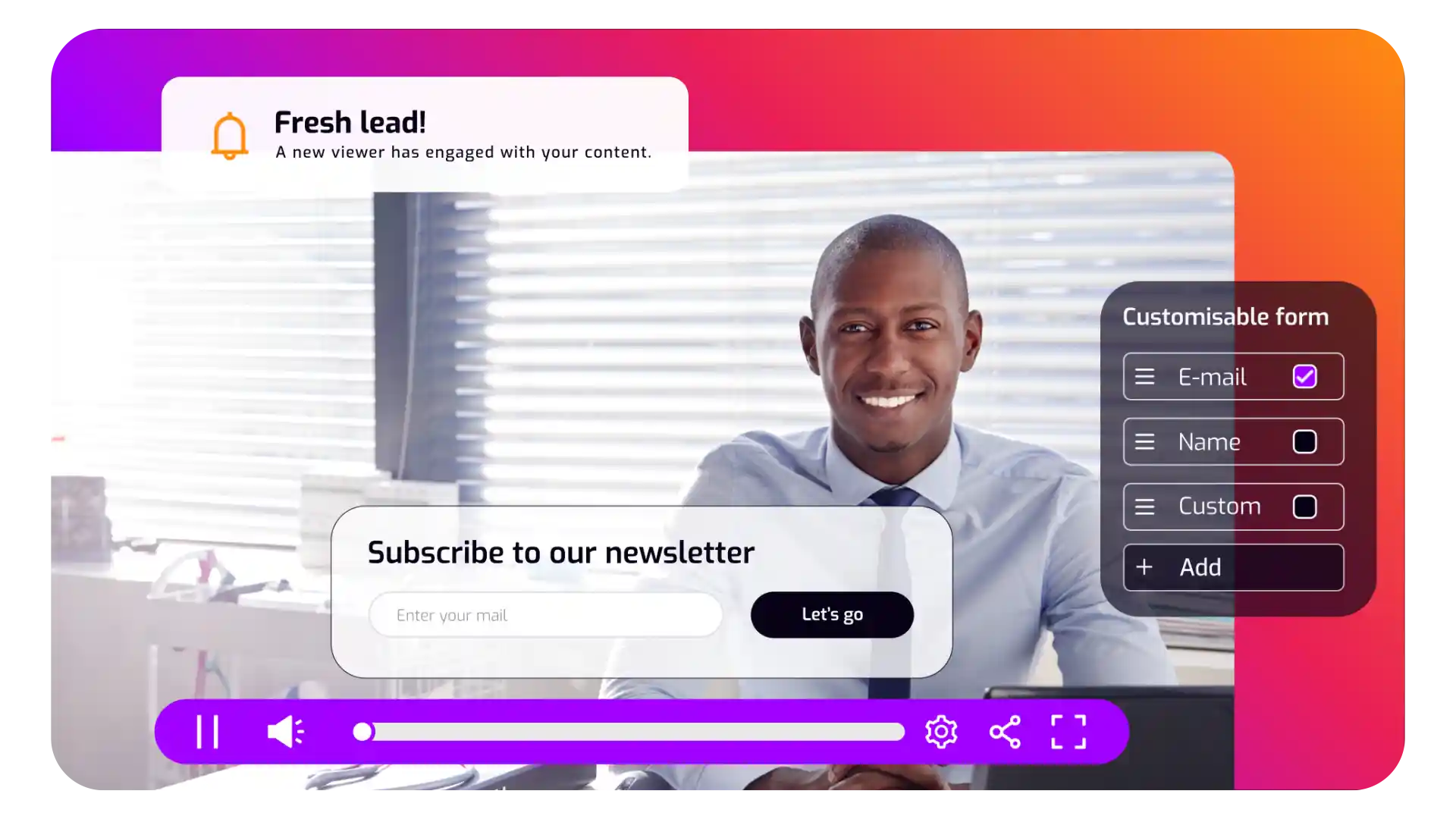
Start by determining which fields should store video engagement data. This may include total behavioural score, last engagement date, key content viewed, or tier status. These fields allow workflows to trigger based on defined thresholds. If you are using interactive CTAs to generate leads within your videos, those in-video submission events can also be incorporated as structured scoring signals.
Next, connect scoring thresholds to automation logic. When a lead moves into a higher qualification tier, that shift should activate routing rules, notify the appropriate sales owner, or adjust nurture sequences. The CRM becomes the execution layer for your scoring model.
A video hosting platform with advanced analytics and CRM integration simplifies this process. Cinema8’s video hosting platform, for example, tracks viewer-level behaviour and supports CRM-ready workflows, enabling video data to feed directly into your lead scoring framework.
Align scoring with sales: what reps should see and when
Lead scoring should translate video analytics into sales-ready insight. The value lies in surfacing behavioural signals at the moment evaluation is actively progressing.
Reps should have visibility into decision-stage engagement generated by video analytics, including which product or pricing assets were viewed, how deeply they were consumed, and how recently activity occurred. This behavioural context shows where a lead is focusing attention and which topics are likely to shape the next conversation.
That visibility should surface as soon as meaningful evaluation thresholds are reached or concentrated viewing activity occurs. Timely awareness through video analytics enables sales teams to engage while a lead's interest is high.
Scoring logic should also be reviewed against pipeline outcomes. When patterns in won and lost deals are analysed alongside video engagement data, weighting can be refined to ensure video analytics continues to reflect genuine lead progression.
How to test and refine your video-based scoring model
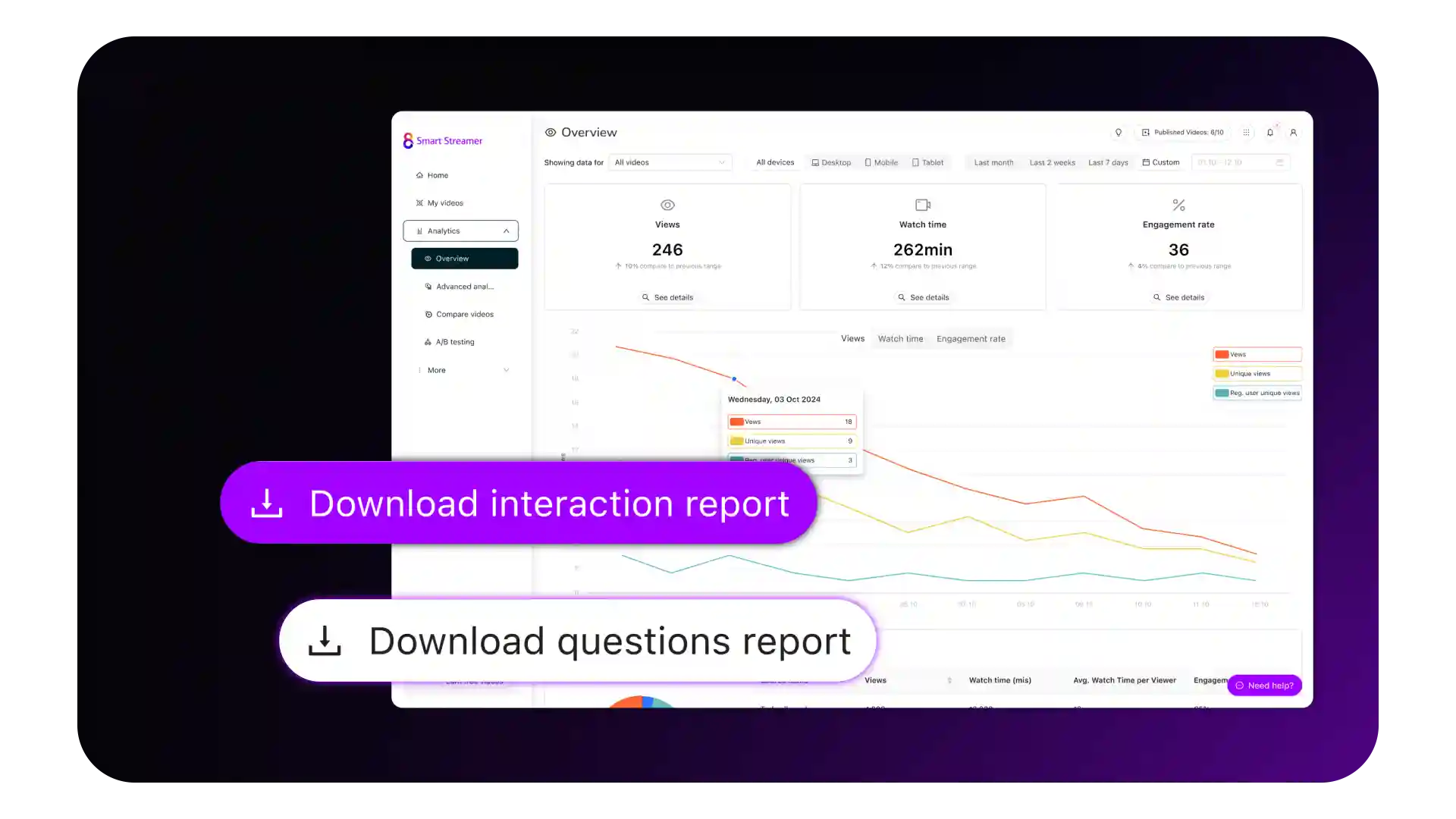
When using video analytics for lead scoring, ongoing testing against pipeline outcomes ensures that behavioural signals continue to reflect accurate lead interest. Use the following process to evaluate and refine your model:
- Compare scores with conversion results: Review whether high-scoring leads are consistently progressing into qualified opportunities. If strong engagement does not correlate with advancement, adjust weighting or thresholds.
- Identify scoring gaps: Look for high-scoring leads that did not convert and lower-scoring leads that did. These patterns reveal whether your model is overvaluing or undervaluing certain behaviours.
- Reassess recency rules: Ensure older video engagement does not inflate current priority. Tighten decay settings if inactive leads remain highly scored.
- Incorporate sales feedback: Validate whether the behaviours driving high scores align with real buying readiness observed in conversations.
Scoring refinement should be periodic and data-led. A model that evolves with pipeline results remains accurate and commercially reliable.
What to look for in a video hosting platform for lead scoring
Lead scoring accuracy depends on the quality of your data. When implementing video hosting at scale across you organisation, the platform should provide viewer-level tracking so engagement can be tied to identifiable leads.
Look for video hosting platforms with video analytics that include detailed watch-depth reporting, replay visibility, and timestamp-level insights. Seeing how much of a video was watched and which sections were revisited allows you to weight behaviours accurately and distinguish light engagement from structured evaluation.
Integration is also important. Video engagement data should sync with your CRM so scores and lead qualification tiers can influence marketing automation and sales prioritisation.
Cinema8’s video hosting platform, for example, combines highly detailed video analytics, secure delivery, and CRM-ready integrations, enabling teams to identify viewer behaviour and turn it into measurable lead scoring.
Turn video hosting into a lead qualification system
A video hosting platform with structured analytics can support lead qualification when engagement data is intentionally tied to lead scoring logic. Decision-stage viewing behaviour, captured at viewer level, provides measurable signals that influence prioritisation, outreach timing, and pipeline focus.
By defining meaningful behaviours, assigning weight, applying score decay, and integrating results into your CRM, marketing and sales teams gain a consistent view of how leads are progressing through the funnel. Video hosting therefore becomes a valuable part of the lead qualification process.
Cinema8’s video hosting platform combines advanced video analytics, secure delivery, and CRM-ready integrations so you can turn viewer behaviour into structured lead scoring data and prioritise the right prospects at the right time. Start using Cinema8 today to apply this approach in practice.